





Route to market
Direct store delivery: what a producer had to change before wholesalers could take its routes
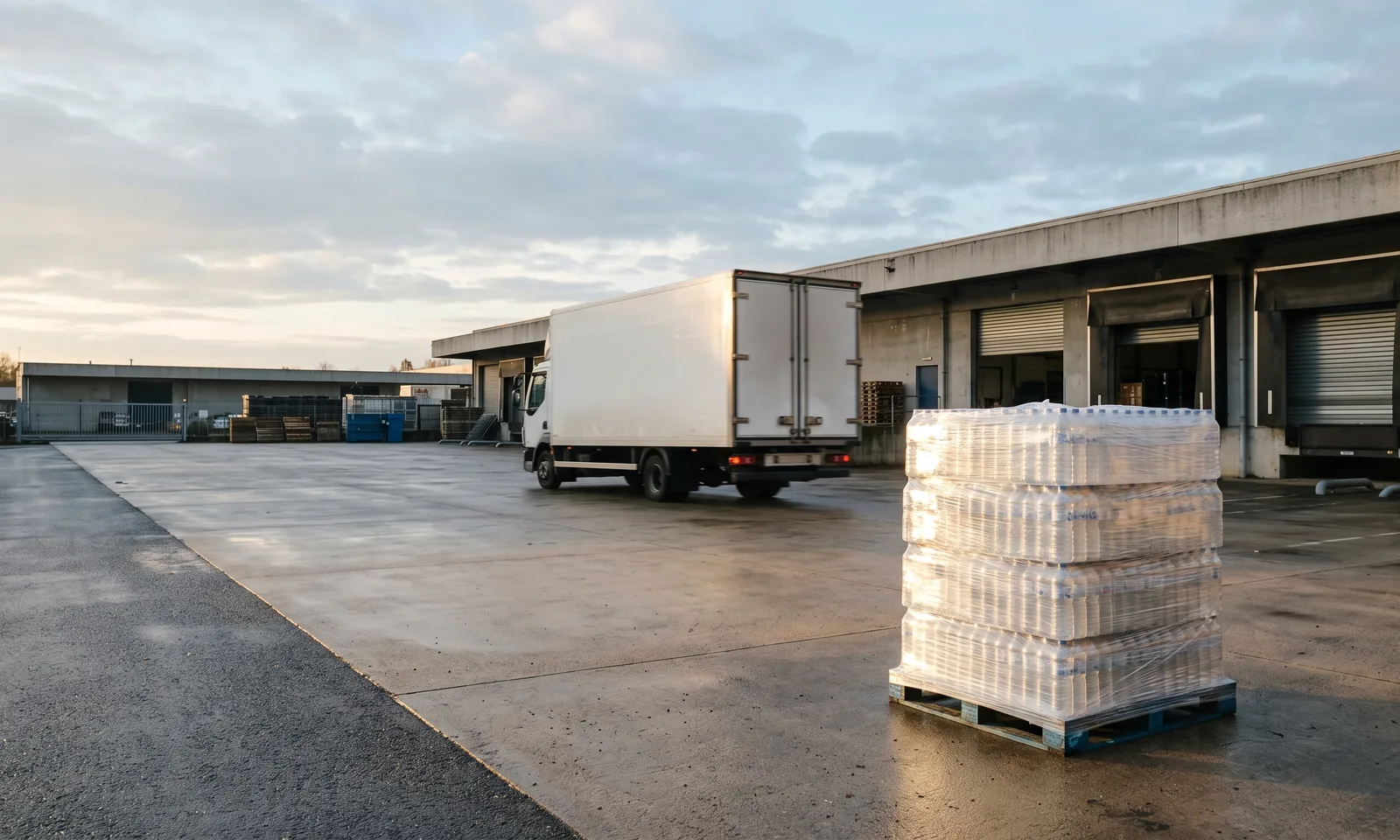 Image generated with AI
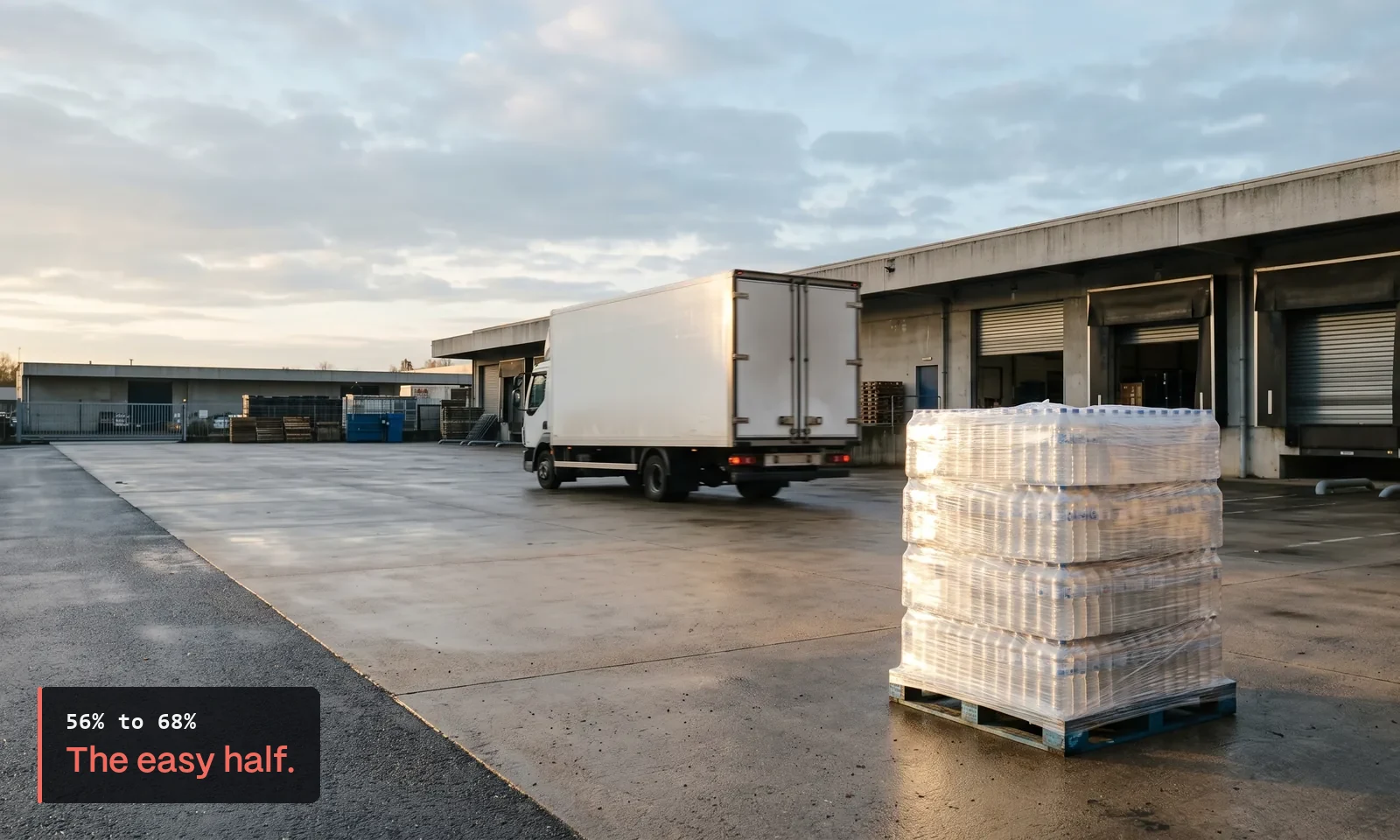
Some categories are strongly predisposed to reconsidering direct store delivery. They are heavy, low-margin per pallet, reordered constantly, and bought in small volumes by shops far from the depot. Water checks every one of those boxes, which is why one beverage producer picked it as the category to test a harder question: what does it actually take, inside your own company, to hand those routes to wholesalers?
It had carried that cost on its own fleet for years: its own trucks, its own drivers, its own invoice to every shop on the route. Then it handed part of that work to wholesalers, in one European market.
The numbers below are what changed after the routes moved to wholesalers:
What you actually hand over
The numbers above were the easy half of the work. The hard half sat in what the producer had to rebuild inside its own company to earn them.
The truck is the visible part. Underneath it, a producer delivering directly owns a set of things it rarely writes down.
It decides which shop gets stock when supply is short. It knows the shop’s order rhythm, because it has been filling it for years. It sets the terms with that shop, one to one. And it has somebody standing in the store every week, looking at the shelf.
Move to wholesalers and all of that passes to another company. The producer keeps the brand and gives up the mechanics, including the last one on that list, which is the one that matters most, even though it is easy to miss.
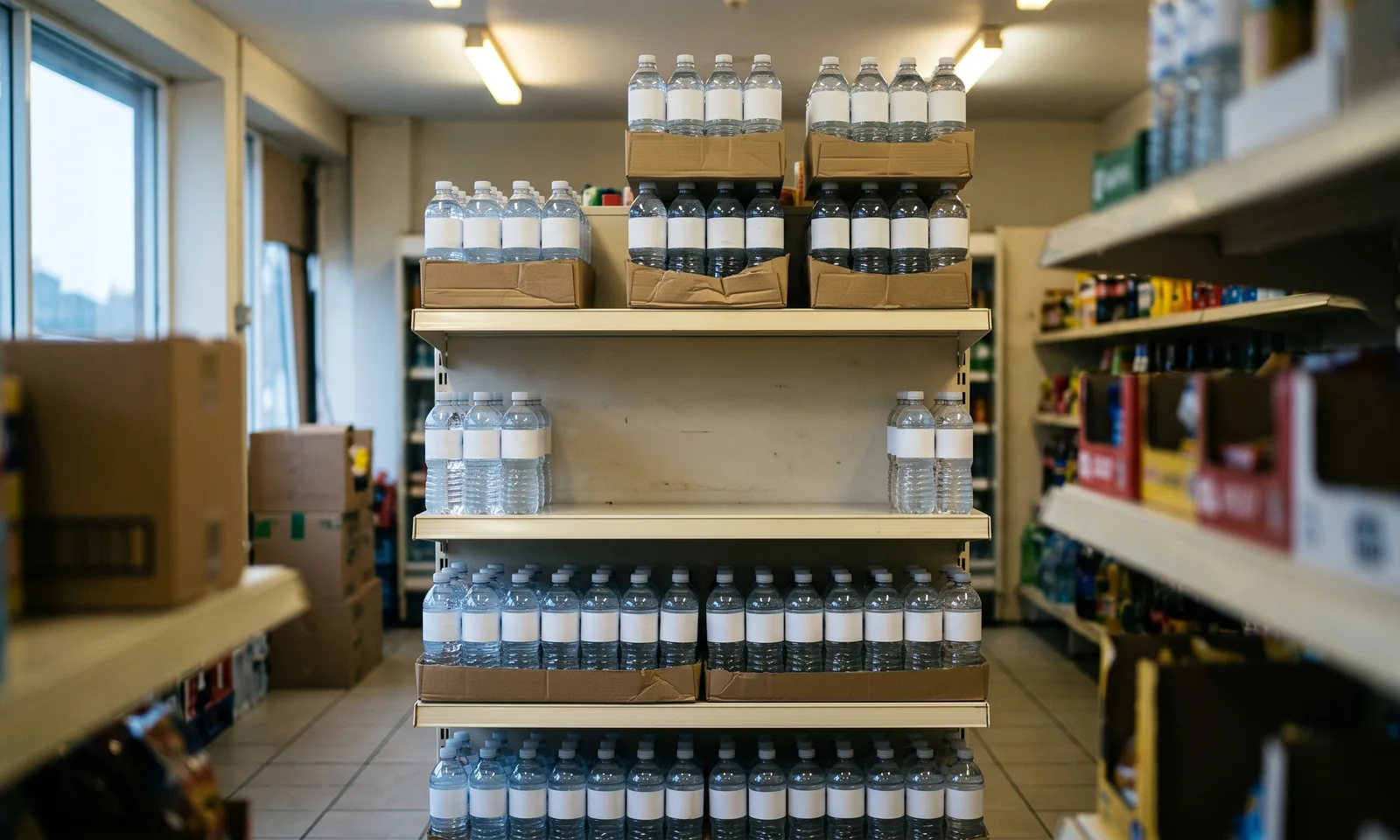
What Nestlé paid to find out
Nestlé USA put a number on how much that last one is worth. In 2019 it left the direct store delivery network it ran for frozen pizza and ice cream. Trade reporting at the time put that network at 4 000 people, 230 warehouse facilities, 1 400 trucks and around 3 million deliveries a year.
Its CEO, Steve Presley, said the historical advantages of direct delivery, speed to shelf and the chance to build displays, “no longer exist”, because retailers had tightened their planograms until there was no extra display space left to gain.
In commercial terms, that is a statement about what direct store delivery was always for. It was a way to buy presence in the store. Nestlé stopped paying for it once that presence stopped being available at that price. A producer handing routes to wholesalers is making the same trade deliberately, which means it needs an answer to the same question: who represents the product in the outlet now, and how does anyone know they are doing it.
A wholesaler is not a retailer’s warehouse
Nestlé moved its volume into retailers’ own warehouses. Those belong to a customer who has already decided to stock the product. They are a logistics link with no commercial agenda of their own toward the brand.
A producer serving small independent outlets is handing volume somewhere else entirely. The wholesaler has its own customers, its own margin, competing brands riding on the same truck, and a customer list it regards as its main asset. It is a company that decides, week by week, how much of your product to sell and to whom.
That is why this move is a commercial negotiation repeated with every partner in the territory, and why the logistics plan ends up the shortest, simplest part of the project.
Four things that had to change inside the producer
A definition of coverage both sides recognize
Producer and partners agreed what counts as a served outlet, and fed that definition with data moving between them continuously. Before the change, coverage was whatever the producer’s own delivery list said. After it, coverage is a figure two companies have to accept as the same figure.
An order that stops being the producer’s own
The rep still visits the shop and still takes the order. The order then routes to the wholesaler covering that territory, through a transfer tool built for it. The shop keeps its relationship with the rep, and somebody else’s truck arrives. That keeps the visit meaningful, instead of a friendly hello with no order behind it.
That covers the accounts the producer’s own force already worked. The accounts it never reached are different. Coverage there comes from the wholesaler side, and not always in the same way: sometimes it is only the truck, sometimes the wholesaler’s own sales force sells the brand into that account as a third party. Those two carry different risk, and the data can tell them apart, because a rep-originated order in the transfer tool marks one and its absence marks the other. The headline reach number will not show that split unless somebody builds the view for it.
Pay tied to what reached the outlet
Warehouse and sales teams stopped being paid against shipments to wholesalers and started being paid against sell-out at the outlet. This carries the most internal friction, because it changes how success is measured for people who were succeeding under the old rules.
One set of KPIs, identical on both sides
Sell-in against sell-out. Stock held at partners. Order fulfillment, meaning what shipped against what the rep placed. Distribution reach. Four measures, one definition each, visible to the producer and to the partner.
Where those four numbers came from
Two of them were always going to follow from logistics. Full truckloads rise because a wholesaler aggregates demand that used to arrive as ten small drops. Reach widens for two different reasons: passively, because wholesalers already serve shops nobody was going to visit at that cost per delivery stop, and actively, where the wholesaler’s own sales force takes the brand into accounts the producer’s force never reached.
Volume and profit are a different kind of number. They did not come from the logistics math. They came from whether the four changes above actually happened: a coverage definition both sides trust, an order path that keeps working, pay tied to what sold, one shared set of KPIs.
None of that shows up as a line item in a logistics model. A model gets truckloads and reach right, and it tells you nothing about whether volume and profit follow.
The expensive part
When the transition is the thing that goes wrong
Kellogg left direct store delivery for its US snacks business in 2017 and moved to the warehouse model it already used elsewhere in the portfolio. The logic was sound and the savings were real. The transition still cost it a year.
The company told the market to expect a drop of around 2% in organic sales that year because of the change. Its quarterly reporting was more specific: the sales benefit it had anticipated was offset by softness in the category and by a reduction in merchandising activity introduced to make the transition easier. It had already warned that some secondary displays and merchandising materials would be lost along the way.
That is the risk in one sentence. To make the handover manageable, the company turned down the very activity holding its position in store, and competitors still running direct store delivery used that period to grow their own position.
There is a second risk, less discussed and harder to undo. In parts of the US beer trade, state franchise laws override the distribution contract itself. Termination clauses stop being valid where they conflict with the statute, and in many states a producer can only end the relationship for good cause, which is a legal standard rather than any business reason, and frequently does not include a distributor missing sales targets. Handing over a territory can be a one-way decision, and the terms accepted at the start are the terms you keep.
The question is never which model wins. It is who is executing in the outlet after the change, and how anyone knows.
Five questions worth answering before the first route moves
- What does each partner get that makes sharing its customer data worth the risk?
- Who is negotiating that, and is it happening before the handover or after the first quarter of missing data?
- What replaces your own people in store, and is it resourced from day one or scheduled for later?
- What are your sales and warehouse teams paid on the day after the switch, and who tells them?
- When your figures and a partner’s figures disagree, which number is treated as correct when the invoice is calculated?
Question three is the one Kellogg answered late. Question five decides whether the arrangement survives its first bad quarter.
What we do in these projects
Asseco has spent thirty years on the data layer between FMCG producers and the partners they sell through. Today that runs to 1 600+ distributors integrated, 85+ manufacturers, and distributor sell-out visibility across 900 000+ outlets.
In a move like the one described here, the work is concrete. Connecting partner systems so their sales arrive continuously, at outlet level, mapped to the producer’s own product and customer codes. Building the order path from the rep’s visit to the wholesaler serving that shop. Agreeing the coverage definition both sides will accept, then holding both sides to one set of KPIs. Settling rebates and joint targets on figures the partner can verify independently, because disputes over settlement are what stop the data arriving.
Integration is the easy half. Getting 1 600 partners willing to send their data is the half that took thirty years.
Frequently asked questions
What changes for a producer moving from direct store delivery to wholesalers?
Deliveries, allocation decisions and daily outlet contact move to the partner. The producer keeps the brand, the field force and the commercial strategy. The internal changes are usually larger than the logistical ones: how coverage is defined, how orders are routed, what sales teams are paid on, and who represents the product on the shelf.
What is the difference between handing volume to a retailer’s warehouse and to a wholesaler?
A retailer’s warehouse is a logistics link belonging to a customer who already stocks the product. A wholesaler is an independent business with its own customers, its own margin and competing brands on the same truck. The second case needs a commercial arrangement on top of the delivery schedule.
What usually goes wrong in the transition?
Losing execution in store while the change is under way. Kellogg reduced merchandising activity to make its own transition easier and reported afterwards that this offset the benefit it expected. Competitors used that period to grow their own position.
Why would a wholesaler share its sales data?
Because the arrangement pays for it: routed volume, qualified orders from the producer’s reps, joint targets it can influence, and settlement on figures it can check itself. Requested as a control measure, the same data usually stops arriving.
What do you pay sales teams on after the switch?
On sell-out at the outlet. Paying on shipments to wholesalers rewards stock moving into a warehouse, which in an indirect model stops being a reliable proxy for sales.

Andrzej Masłowski
Deputy Director of Sales and Implementations
Asseco Business Solutions
Andrzej runs sales and delivery for Trade Data Hub and Trade Terms & Settlement. His work sits in the layer this article is about: the data and the commercial terms between a producer and the distributors, wholesalers and chains it sells through.
If you are weighing a move like the one described here, that is the conversation to have.
See how partner data works in practice
Trade Data Hub connects the systems of the distributors, wholesalers, chains and online partners you sell through, and returns their sell-out as one view of the market, down to the store, in your own product and customer codes.