





How OSHEE scales retail execution across 55 markets
For fast-growing FMCG brands, retail execution at scale is the difference between sustainable growth and growth that collapses under its own operational weight.
What is retail execution at scale?
Retail execution at scale means keeping the brand promise consistent across every point of sale, regardless of how many markets, channels, or partners are involved. It covers availability, on-shelf presence, pricing compliance, planogram adherence, and the day-to-day work of field sales reps and third-party merchandisers.
For a single store, retail execution is a local discipline. At scale, across tens of thousands of stores in multiple countries, it becomes a systems problem. Marketing generates demand. The shelf either confirms it or breaks it. There is no middle ground.
Why FMCG brand growth widens the execution gap
The faster an FMCG brand grows, the wider the gap between its marketing promise and operational reality. More SKUs, more stores, more channels, more markets. Each layer multiplies the complexity, and each layer compounds the cost of a single execution failure.
OSHEE’s scale makes this vivid. The brand is present in 55 markets, has surpassed PLN 750 million in revenue, is the Official Hydration Partner of LaLiga, and works with ambassadors like Iga Świątek. This is growth in full motion. But growth is loud, and the louder it gets, the harder it becomes to hear what’s happening at the shelf.
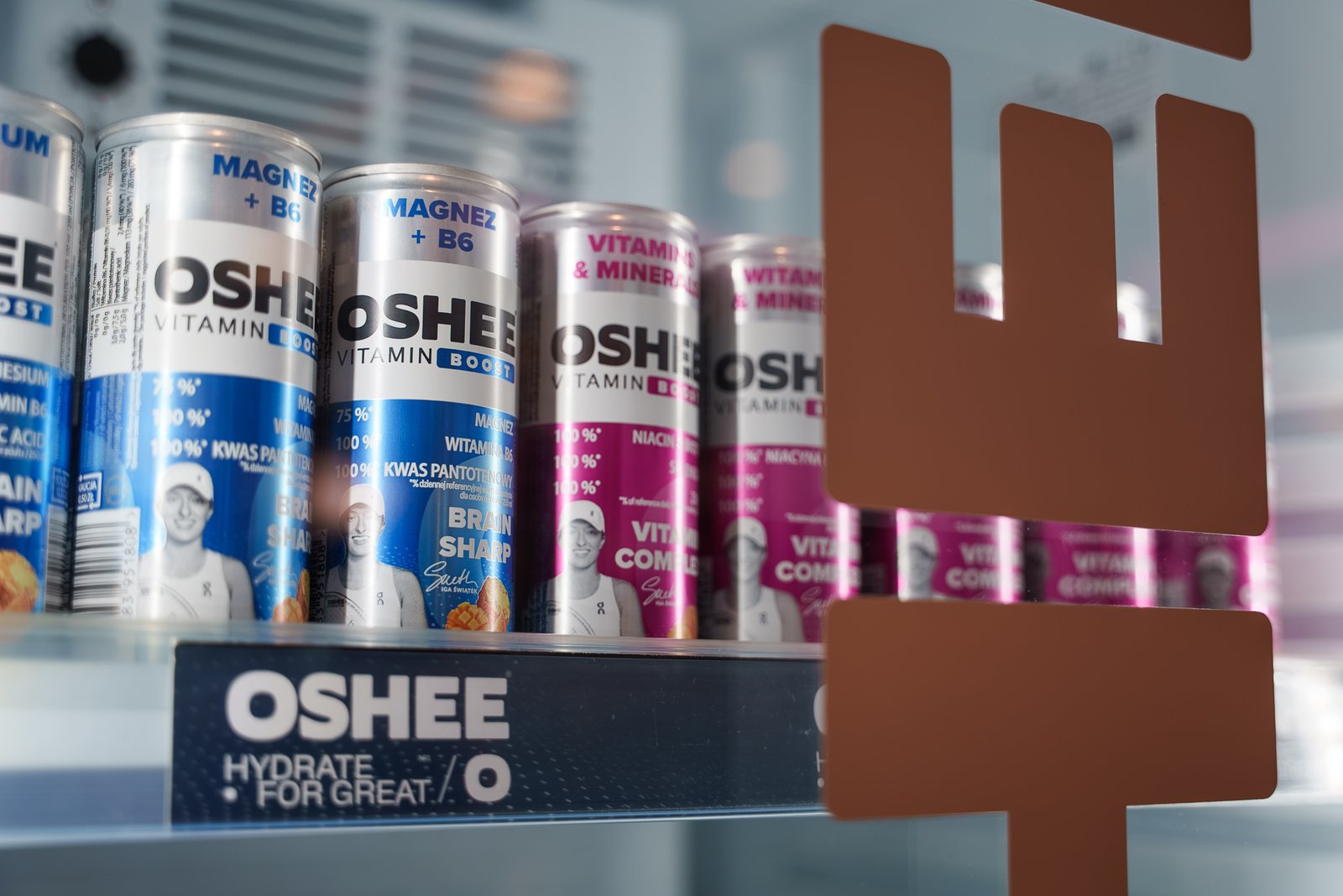
OSHEE Vitamin Boost line with brand ambassador Iga Świątek.
Marketing creates expectation. Retail verifies it.
Tomasz Pastwa · Director of Traditional Trade Sales, OSHEE
How does OSHEE close the “last-meter” gap?
OSHEE’s answer rests on two operational pillars, both powered by Asseco Platform. Each pillar closes a specific type of gap between the brand’s promise and the consumer’s experience.
Availability reality
A brand cannot fix what it cannot see. In a distributed FMCG model (manufacturer, distributor, wholesaler, retailer, HoReCa partner), visibility into what is actually available at each level is usually fragmented, delayed, or reconstructed after the fact.
OSHEE uses Trade Data Hub to consolidate distribution, sales, and inventory data from commercial partners into one view and spot availability issues before they reach the consumer.
Shelf reality
Availability is necessary but not sufficient. The product can reach the store and still lose at the shelf: wrong placement, wrong price tag, missing facings, competitor in your planogram slot.
This is where Retail Image Recognition closes the loop. A field rep photographs the shelf, AI analyzes it in seconds, and returns an on-the-spot recommendation. Accuracy is up to 98%.
Together, Trade Data Hub and Retail Image Recognition form OSHEE’s data foundation, the layer behind every field decision. Read more about Trade Data Hub.
How does one model work across multi-channel execution?
OSHEE sells through traditional trade, modern trade, HoReCa, and fitness/wellness channels. Some are served by OSHEE’s own reps. Others by third-party merchandising agencies. Still others, like the gym and club channel, by van sellers working directly with the brand’s cold chain.
The challenge at this scale is not that each channel is complex. The challenge is that every channel has to operate on the same standards, the same KPIs, and the same real-time view. Otherwise the organization loses comparability and the brand loses consistency.
OSHEE runs all channels on the same retail execution ecosystem: own reps, agency partners, van sellers. Central management sees one dashboard. Every execution data point lands in the same system. There is one version of the truth, visible in real time, regardless of who physically executes the visit.
Can the same model scale across borders?
Entering a new country traditionally means rebuilding the operational stack: new partners, new tools, new KPIs, new dashboards. For a fast-moving FMCG brand, this is where execution usually degrades.
OSHEE approached Finland differently. Working with a trusted local field execution partner, Finnish teams run the same Image Recognition, the same field execution software, and report into the same KPI framework as teams in Poland. OSHEE’s Kraków headquarters sees Helsinki the same way it sees Warszawa.
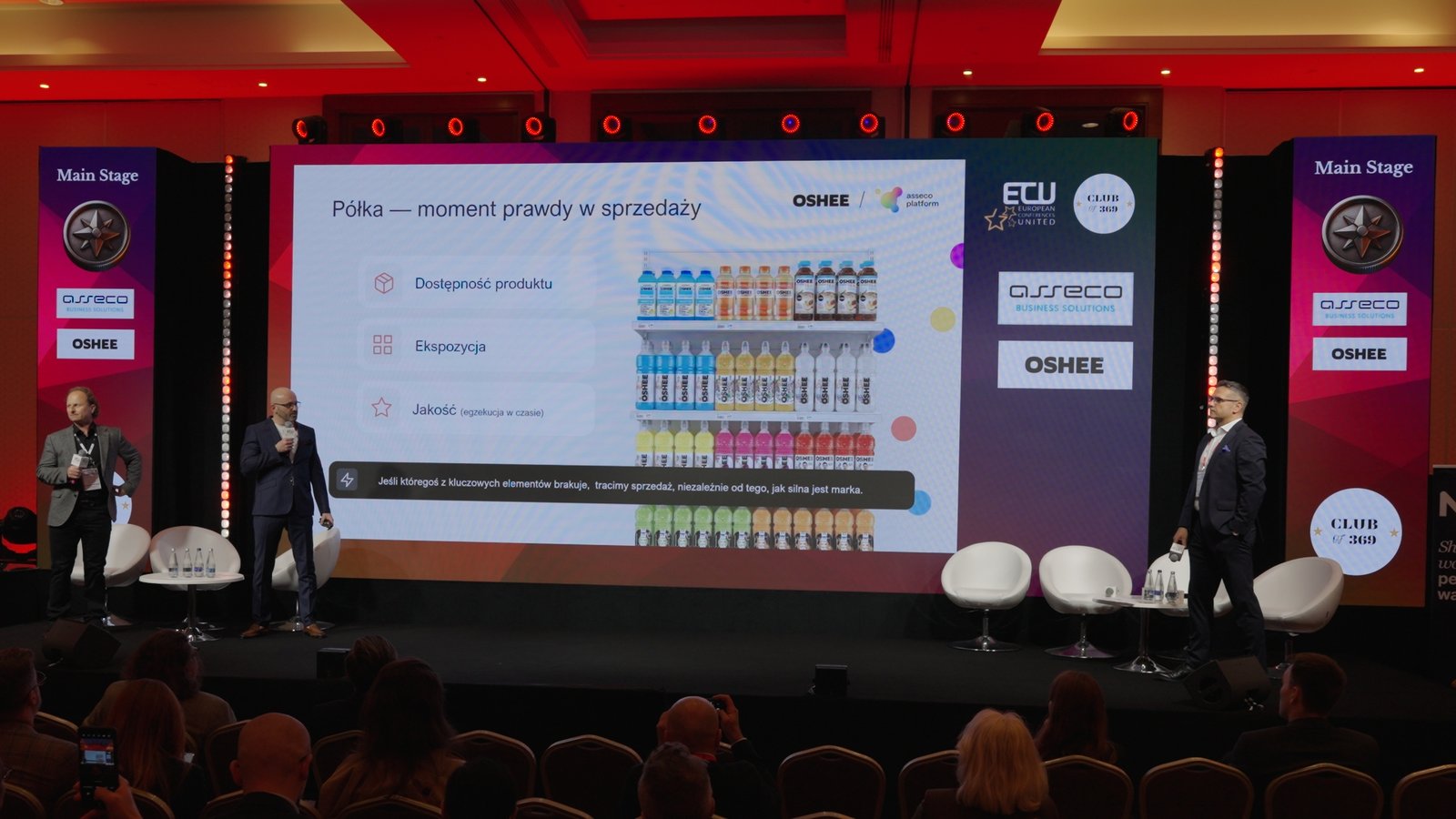
The lesson, delivered from the Main Stage by OSHEE’s International Commercial Director Jarosław Termin, is directly useful for any FMCG brand expanding across European markets:
We don’t export only the product. We export the way we operate: the standards, the KPIs, and the tools that make them real.
Jarosław Termin · International Commercial Director, OSHEEThis is the operational definition of retail execution at scale. It is also why the story of OSHEE and Asseco Platform resonated with the Summit’s audience of 3,400+ retail and FMCG leaders, 65% of whom sit at director level or higher.
What’s next: AI prediction for field sales
Real-time execution was the 2020s challenge. The next horizon is prediction. Instead of reacting to what happened at the shelf yesterday, FMCG brands want to know what is most likely to happen tomorrow, and what the highest-leverage field action is today.
Asseco Platform is embedding predictive AI across Sales & Retail Execution and Retail Image Recognition. In the field, the direction is Asseco Platform Genius: pre-visit briefings generated for each rep, priority recommendations by outlet, dynamic suggested orders based on shelf reality plus consumption patterns. For brands like OSHEE, that means moving from reactive retail execution to proactive brand growth.
Frequently asked questions
What is retail execution?
Retail execution is the operational work of ensuring a brand’s products are available, visible, correctly priced, and merchandised according to standards at every point of sale. It combines field sales visits, planogram compliance, promotional execution, and data-driven corrective actions.
What is image recognition in FMCG?
Image recognition in FMCG uses AI to analyze photos of retail shelves and instantly verify planogram compliance, pricing, facings, out-of-stock situations, and competitor presence. Asseco Platform’s Retail Image Recognition delivers accuracy of up to 98% with real-time recommendations to the field rep.
How does Asseco Platform support FMCG brands?
Asseco Platform is a European FMCG retail execution platform covering Sales & Retail Execution, Retail Image Recognition, Trade Data Hub, Trade Terms & Settlement, and Route-to-Market Optimization. It has 450+ FMCG deployments in 74 countries and 125,000+ users. In 2026 it received 9 POI Best-in-Class Category Distinctions.
Want to close the gap between brand promise and shelf reality?
OSHEE’s case is one of many. Asseco Platform supports FMCG brands, from global leaders to fast-growing European challengers, in scaling retail execution across markets, channels, and borders.
Talk to our team →