






Build distribution where your own team never goes.
Your reps reach your top accounts. Everywhere else is out of range. Partner-Led Distribution Building puts your priority products on the shelf through your distributor’s field force — in the stores you don’t visit — and you pay only for distribution that’s actually built and held.
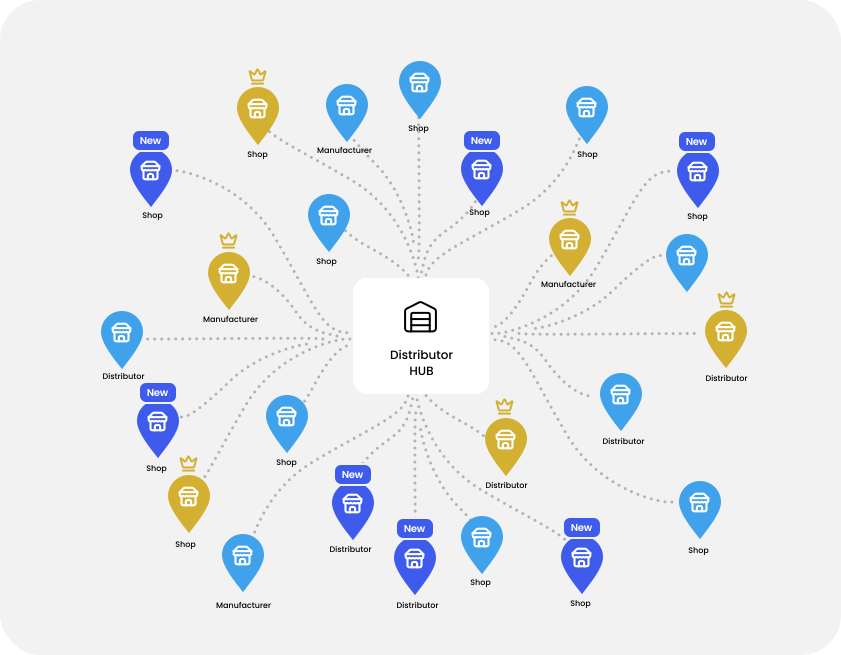
you pay for distribution that holds, not headcount
powered by dynamic store segmentation
the stores you never visit
Your own field force can’t be everywhere — and it costs the same whether it sells or not.
Your reps cover the accounts that matter most. The long tail — thousands of smaller outlets that still add up — stays beyond reach. Meanwhile your distributor’s reps drive to those stores every week. The reach already exists. It just isn’t working for your distribution goals.
Without the module
- Your own reps reach only your priority accounts
- The long tail of outlets stays uncovered — or covered at a loss
- Field-force cost is fixed, whether the result lands or not
- New listings stall in stores you never visit
- „Building distribution” beyond your route is guesswork
With the module
- Your distributor’s reps build distribution in outlets you don’t reach
- AI picks the outlets most likely to stock and keep selling
- You pay only for distribution that’s built and held — per result
- Reps act on your targets during the visits they already make
- Sell-out reports close the loop: what sold, what stuck
The reach is already there. Partner-Led Distribution Building turns it into numeric distribution you pay for only when it holds.
Three phases, one closed loop.
The program runs with your distributor’s agreement — their reps, your targets, transparent incentives.
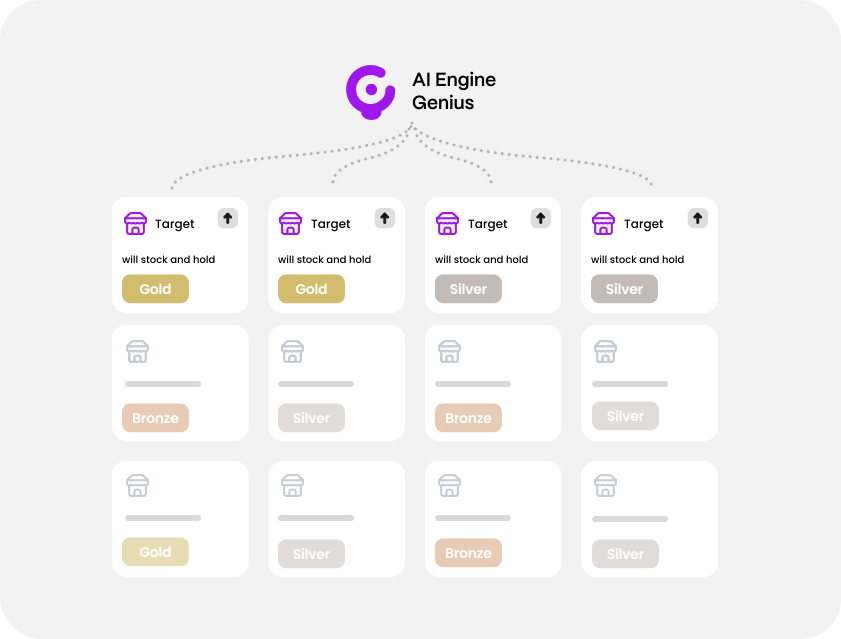
Strategy & AI targeting
You choose the products or product groups to push. AI store segmentation — the same engine behind Asseco’s dynamic store segmentation — scores the distributor’s outlets and picks the ones most likely to take the new listing and keep reordering.
Why it matters: You stimulate distribution that sells through — not stock a store can’t move.
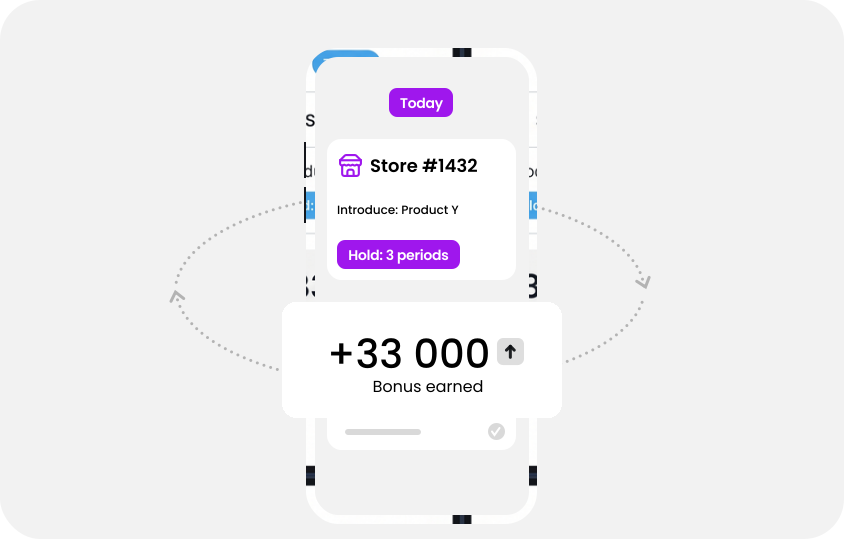
Distributor field execution
Each targeted outlet and product reaches the distributor’s rep: what to introduce, where, and how long to hold it — plus a live bonus that accrues as the target is met.
Why it matters: The rep executes in the distributor’s own SFA, on the route they already drive — no new tool to learn.
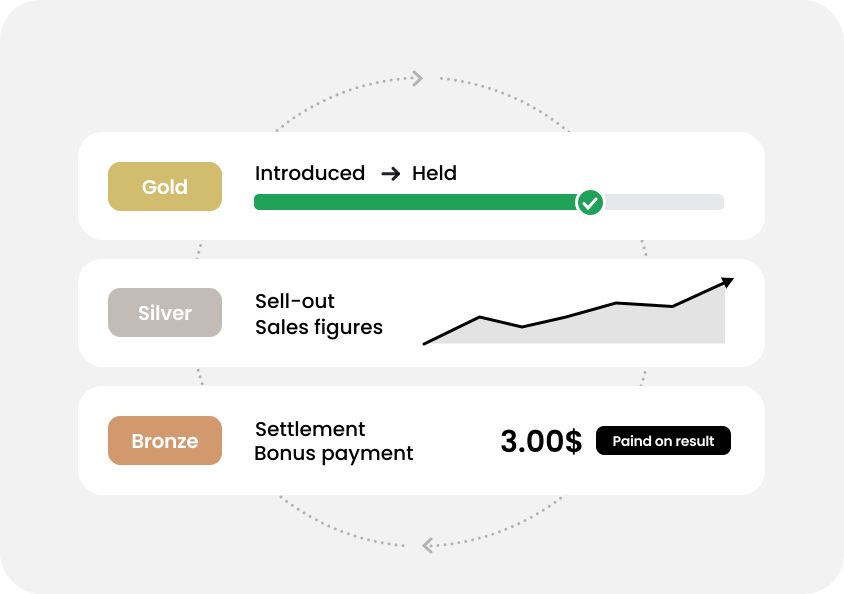
Sell-out measurement & settlement
Distributor sell-out reports feed the loop: how much of the target sold, and how much held in continuous sales over the period — where that distributor data needs integrating, Trade Data Hub brings it in.
Why it matters: The bonus is calculated from invoiced sell-out — you pay only for distribution that held.
Everyone wins — which is why it sticks.
Distribution building lasts when the commercial incentive lines up for everyone involved. Here’s what each side gains.
Manufacturer
Reach beyond your own field force and pay only for distribution that’s built and held. No fixed cost for results that never land.
Distributor
Your reps are stimulated to sell more of the manufacturer’s range — more turnover, more margin for you — and you don’t pay for the activity. The manufacturer does.
Distributor’s rep
Real extra income, earned during the route you already drive. Clear targets, a visible bonus, paid on results.
Activity that pays everyone strengthens the manufacturer–distributor relationship — and opens the door to deeper collaboration.
Market analysts and standards recognize Asseco Platform.
Independent endorsements that strengthen your internal business case.



Gartner does not endorse any vendor, product or service depicted in its research publications, and does not advise technology users to select only those vendors with the highest ratings or other designation. Gartner research publications consist of the opinions of Gartner’s research organization and should not be construed as statements of fact. Gartner disclaims all warranties, expressed or implied, with respect to this research, including any warranties of merchantability or fitness for a particular purpose. Gartner, Market Guide for Retail Execution Management in Fast-Moving Consumer Goods, April 2025, G00768127. GARTNER is a registered trademark and service mark of Gartner, Inc. and/or its affiliates in the U.S. and internationally, and is used herein with permission. All rights reserved.
Model the return before you spend.
Distribution building shouldn’t be a leap of faith. Estimate the return before you commit a single activation.
Illustrative planning estimate, in your own currency — not a guarantee. Listings = outlets × listings per outlet × success rate. ROI = (gross margin − program cost) / program cost.
The questions we get most often about partner-led distribution.
Gathered from conversations with sales directors and trade-marketing managers at FMCG manufacturers. If your question isn’t here — get in touch.
What it is and how it differs
What is Partner-Led Distribution Building?
A module that lets FMCG manufacturers build distribution of selected products through the distributor’s own sales force — in outlets the manufacturer’s own team doesn’t reach. AI selects the best-prospect stores; you pay for results, settled on invoiced sell-out.
How is this different from using a merchandising agency?
This module uses the distributor’s field force to build distribution — getting products listed and selling. Shelf quality and visibility (merchandising) is handled by merchandising agencies in a separate module, Partner-Led Merchandising. Different executor, different objective.
How is this different from promotional settlement?
Promotional settlement reconciles a promotion with a retail partner on receipt data. This module pays the distributor’s rep a performance bonus for building and maintaining distribution — a different object and a different payee.
Commercials and execution
Who pays the distributor’s reps?
The manufacturer. The distributor doesn’t pay for the activity but benefits — its reps are stimulated to sell more, increasing the distributor’s margin.
How is performance measured?
On the distributor’s sell-out reports, per the manufacturer–distributor agreement: how much of the target sold, and how much held in continuous sales over the period.
Does the rep need a new app or a new process?
No. The rep keeps working in the distributor’s own SFA — the tool they already use. Asseco delivers your targets and the live bonus to the rep and tracks the result; execution stays on their existing route.
What products can be targeted?
Any selected products or product groups, set by your strategy.
Compliance
What about competition law and data independence?
The platform preserves each party’s market-action independence — operational tasks and data are shared, commercially sensitive data is not.
Build distribution beyond your own reach.
See how Partner-Led Distribution Building works for your portfolio — which products to push, which outlets to target through your distributor, and what it returns.