






From Paper to Same-Day Digital: Digitizing Trade Marketing Display Settlement
For an FMCG confectionery producer, settling in-store promotional displays was the last process still running on paper — agreements filled in by hand during store visits, mailed to headquarters, reconciled weeks later. Digitizing it on Asseco Platform’s Sales & Retail Execution compressed the billing cycle from weeks to days and turned every settlement into structured, e-invoicing-ready data.
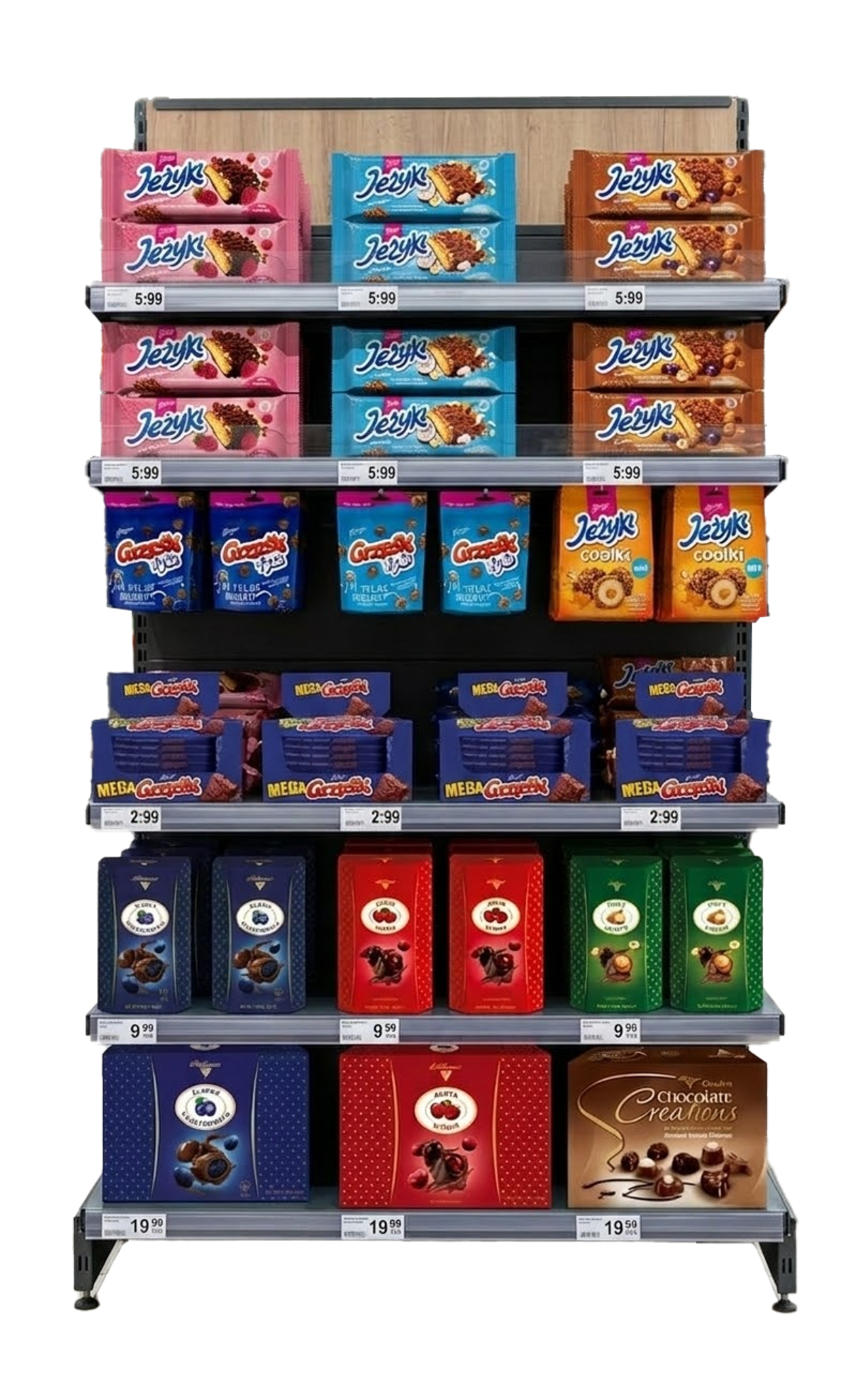
| Industry | FMCG — confectionery & snacks |
|---|---|
| Market | Central European market |
| Scale | ~4,200 promotional display settlements per year (~350/month) |
| Display types | Floor stands, purchased endcaps, branded shelf fixtures, refrigerated cabinets, POS |
| Before | Fully paper-based — forms in a briefcase, settlement outside any system |
| Asseco Platform solution | Sales & Retail Execution (Trade Marketing settlement module) |
| Key result | Billing cycle weeks → 2–3 days · near-zero processing errors · ~4,200 settlements/year fully digital and e-invoicing ready |
Paper Forms and Postal Mail Were Blocking Scalable Display Settlement
The producer pays retailers for in-store promotional displays — branded floor stands, purchased endcaps, shelf fixtures, refrigerated cabinets, dedicated display areas. Each placement requires a formal promotional agreement: what service, for which product categories, how long, and at what fee.
Until recently, that entire process ran on paper. Field representatives carried printed forms and filled out promotional agreements by hand during store visits. Completed documents were physically mailed back to headquarters. Finance had no real-time view of how many agreements were signed, pending, or in dispute. Reconciliation stretched the billing cycle by weeks.
And because nothing was structured, no data existed to analyze which display types, store formats, or regions delivered the best return. The spend was real and significant — but invisible.
This Is Not a Niche Problem — Trade Promotion Is One of FMCG’s Largest, Least-Controlled Costs
The reconciliation gap at the center of this story — a process too slow and too costly to scale, with no structured data to learn from — is exactly where that waste begins.
Five Moments That Changed
1. Promotional plans are integrated automatically from trade marketing. The display actions planned by the trade marketing team flow into the platform automatically, before each settlement period — no manual setup, no entering them store by store in the field. The plan is set at headquarters and reaches reps ready to execute.
2. Field reps focus on the store, not the paperwork. When a rep visits a store with an active display, they open the settlement on their phone — during the visit or afterwards. They confirm the display details, set the agreement end date, collect a signature on screen, and sync. What used to mean carrying forms and posting documents now takes a few minutes.
3. The agreement reaches the retailer the same day. The moment the rep syncs, a complete, branded promotional agreement PDF is generated automatically and emailed to both the rep and the retailer. The retailer holds a signed document before the day is over — no waiting for the post, no disputes about what was agreed.
4. Finance receives clean data, not papers to process. Every signed agreement and its underlying data flow straight into back-office and finance systems — store, display type, region, cost center, fee, and invoice reference included. No scanning, no manual entry, no chasing reps for missing records.
5. Trade marketing can finally see what was agreed, where, and at what cost. Management gains a single, real-time view of all display actions — signed, pending, by region, store format, display type, and rep. Spend that was invisible becomes measurable: the data foundation that makes ROI analysis possible.
The Settlement Document: Structured, Signed, and E-Invoicing Ready
Every settlement produces a fully enforceable, two-party promotional agreement: both parties identified by full legal and commercial data, the exact service and product categories defined, the duration and net fee specified, and signatures captured in store. Once finance confirms execution, the agreement carries the invoice number and date — a complete, auditable record from agreement to settlement.
Crucially, the document is structured data, not a scanned image. As e-invoicing mandates expand across European markets, settlement documents that are born digital — with the invoice reference already attached and the data machine-readable — are ready to feed national e-invoicing systems without re-keying or manual conversion. In Poland, that means the same workflow produces documents ready for the mandatory KSeF (National e-Invoicing System). The paper trail that used to be a compliance liability becomes a clean digital record by default.
No Paper, Same-Day Documents, and Spend You Can Finally Measure
| Area | Before | After |
|---|---|---|
| Document format | Paper forms, physical mail | Digital PDF, same-day delivery |
| Billing cycle | Weeks | 2–3 days |
| Processing errors | Manual error rate + correction costs | Near zero |
| Data availability | None (paper archive only) | Full visibility by display type, region, store, rep |
| Rep admin time | Significant per settlement | Minutes |
At roughly 4,200 settlements a year, the move from manual document handling (an industry-typical $12–$20 per document) to a digital workflow ($2–$3 per document) translates into $40,000–$70,000 a year in processing costs alone — before counting faster billing, fewer errors, and recovered duplicate payments. (Cost figures based on implementation data and CPG industry benchmarks.)
The strategic gain is the data itself. With every settlement now structured and exportable, the producer can — for the first time — compare ROI per display type, benchmark regional execution, and forecast trade marketing budgets on real history instead of estimates.
Capabilities Behind This Case
This case runs on Sales & Retail Execution (SRE / Mobile Touch) — Asseco Platform’s field execution solution. Reps complete each settlement in the mobile app during store visits, and the platform generates and delivers the promotional agreement automatically.
Two adjacent capabilities extend it: Retail Image Recognition can confirm from a photo that a display is physically in place, and One View turns the settlement data into trade marketing spend and ROI dashboards by display type and region.
Frequently Asked Questions
What is trade marketing display settlement?
It is the process of formally agreeing and accounting for in-store promotional displays — floor stands, endcaps, shelf fixtures — that a producer pays a retailer to place. Each display requires a signed agreement defining the service, duration, and fee, which is then reconciled and settled.
How does digitizing display settlement reduce cost?
Replacing paper forms and physical mail with a mobile workflow cuts the cost of processing each document from roughly $12–$20 to $2–$3, removes manual errors, and compresses the billing cycle from weeks to days. At thousands of settlements a year, the processing savings alone reach tens of thousands of dollars.
Does the field rep need to be online in the store?
No. Reps can complete a settlement during the visit or afterwards, and sync when convenient. The signed agreement PDF is generated and delivered automatically once synced.
Is the settlement document ready for e-invoicing?
Yes. The document is structured data with the invoice number and date attached, so it can feed national e-invoicing systems — including Poland’s mandatory KSeF — without manual conversion or a paper trail.

Marcin Grzegorczyk
Director of Market Development & Sales Enablement, Asseco Business Solutions
I lead market development and sales enablement for Asseco Platform — a European FMCG retail execution platform with 55,000+ field reps using our software daily across 62 countries. My work spans brand positioning, category narrative, lead generation, and field research like the case you just read.
See what digitizing trade marketing settlement looks like for your business
Book a demo →This case study is published without the client’s name at their request. Operational data has been verified internally; cost and performance figures are supported by CPG industry benchmarks. The client is a leading FMCG confectionery producer operating in Central Europe.